The Takeoff The estimate
Read the roofing quote in your hand in ninety seconds
A good roofing estimate is a specification with a number at the bottom. A poor one is a number with adjectives above it. Five items separate them, most quotes contain two of the five, and you can check yours before you reach the end of this page.
Get the quote out and read along. Everything on the rest of this site is a variable. This page is the document those variables should appear on. If a line below is missing from a quote you have been handed, that is not automatically bad faith, but it is a question, and how it gets answered tells you most of what you need to know.
The order the lines should appear in
The measurement
Squares, and how they were arrived at. Plane by plane if the roof has more than one slope. The pitch used for the multiplier. The waste allowance applied, as a percentage, and ideally a word about why that allowance suits this roof.
Tear off and disposal
How many layers are expected, what happens if there turn out to be more, and who is disposing of the debris. Protection of the property should appear here too: what gets tarped, where the dumpster sits, and what goes underneath it.
Deck inspection and the unit rate
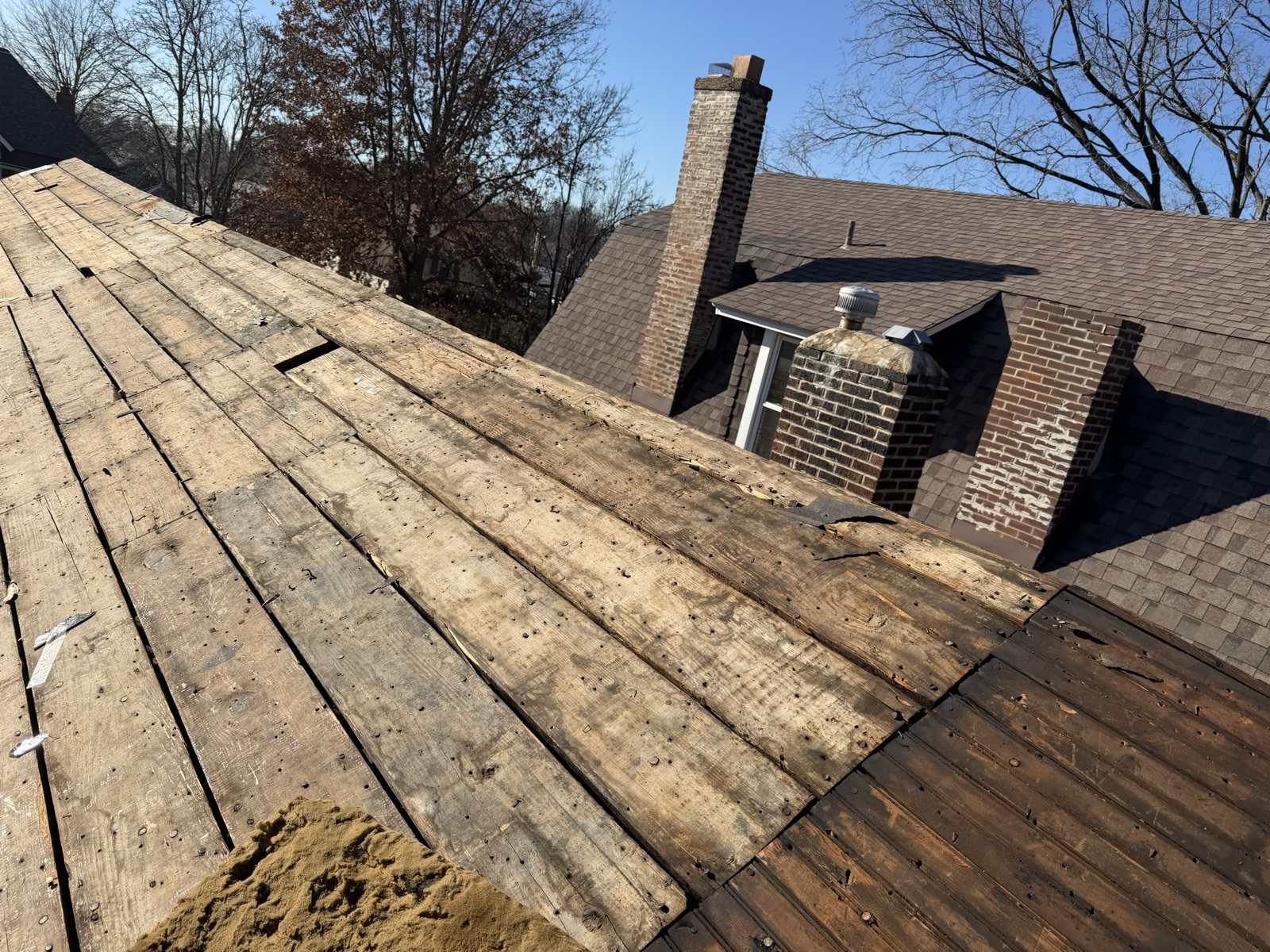
The line that matters most. Replacement sheathing at a stated rate per sheet or per board, agreed in advance, with the count photographed. See the decking page for why this one line does more work than any other.
The assembly, from the deck up
Underlayment type. Ice and water barrier, and specifically where it goes and how much. Starter at eaves and rakes. Drip edge. The exact shingle product. Fastener type and pattern. Ridge cap product.
Flashing and penetrations, as a count
Chimneys, skylights, dormers, pipe collars, vents, valleys and sidewall in linear feet, and at each one whether the metal is new or reused. A quote that says "flashing as needed" has left a quantity undecided.
Ventilation
What exhaust is going on, in linear feet or by count, and what is happening about intake. A roof with exhaust and no intake does not ventilate.
Gutters and downspouts, if in scope
Either included with sizes and linear feet, or explicitly excluded. Not left ambiguous, because a tear off frequently damages an old gutter and the argument afterwards is unpleasant.
Permits, cleanup and the conditions
Who pulls a permit if one is needed, what the cleanup includes, how many magnetic sweeps, payment schedule, cancellation rights, and what warranties exist in the manufacturer's and the company's own documents.
The four lines that go missing most often
- The decking unit rate. Overwhelmingly the most common omission, and the most expensive one.
- Whether flashing is new or reused. Usually resolved by silence in favour of reuse.
- Intake ventilation. Exhaust gets specified. Intake gets assumed to exist.
- What happens if there are more layers than expected. Knowable in advance, frequently not established.
Phrases that mean a quantity has not been decided
Certain formulations do real work in a document by appearing to commit to something while committing to nothing. "As needed" means the quantity will be determined later by the person who is charging for it. "Where required" is the same phrase in a suit. "Industry standard" is not a standard, it is an appeal to a body of practice that varies enormously. "All necessary flashing" leaves both the count and the newness open.
None of these prove anyone is acting badly. Plenty of good companies write them out of habit. But every one is a place where a quantity should be, and asking for the quantity costs you nothing and takes a minute.
What to do with two estimates that do not match
Put them beside each other and go down this page's list rather than down the totals. In most cases the gap turns out to be explainable within three lines: one company measured more squares, or one is replacing flashing the other is reusing, or one has priced an ice barrier across the whole roof and the other only in the valleys. Once you know which, the decision becomes a real choice about scope rather than a guess about honesty.
And if a company cannot or will not answer these questions in writing, that is itself the answer. The questions are not clever, they are not adversarial, and everyone competent has been asked them before.
One thing an estimate cannot do
It cannot deal with your insurance company for you. Under RSMo 407.725 a roofing contractor in Missouri may not represent or negotiate on a homeowner's insurance claim, and the same statute bars advertising to absorb or rebate a deductible. What a contractor can properly do is measure the roof, photograph the damage, put the scope in writing, and be present on site when the adjuster comes. The claim itself stays yours from beginning to end.
Bring the quote you were handed
Send us the quote you already have and we will measure against it
Keys will measure your roof and produce the same document properly: square count, measured pitch, expected layers, decking unit rate, the assembly from the deck up and the penetration list. Put the two side by side. Where they disagree on a quantity, one of them has not been on your roof, and you will be able to see which.
If you would rather talk it through, this is the office line and not a call centre.
(314) 220-2333Keys Roofing, greater St. Louis