The Takeoff Layers
How many layers are on your roof, and who actually counted them
Two layers is roughly double the tear off labour and roughly double the tonnage going to a transfer station that charges by weight. The count can usually be read at the rake edge in five minutes. An estimate built on an assumption here is an estimate that grows on the first morning.
Nobody should be pricing your tear off from a guess, and almost nobody has to. Before a single new shingle is opened, an existing roof has to come off, go down a chute or into a barrow, land in a dumpster, and be driven to a transfer station that charges by weight. That sequence is most of the first day, sometimes all of it, and it scales almost linearly with how much material is up there.
How much a layer actually weighs
Asphalt shingles are heavy, and people consistently underestimate this. A square of three tab is in the region of two hundred to two hundred and fifty pounds. A square of architectural shingle is heavier still. On a modest twenty five square roof that is two to three tons of material for one layer, before underlayment, nails, flashing and whatever the previous roofer left behind.
Double it for two layers. That is a second dumpster or a second haul, a second round of tip charges, and a second day of somebody carrying it. The disposal line on an estimate is not a padding line, it is a weight based cost that the roofer is also being charged.
What the layer count changes
- Tear off labourHours on the deck with bars and shovelsRoughly doubles
- Tonnage to the transfer stationCharged by weight, not by volumeRoughly doubles
- Dumpster capacity neededMay become two hauls on a large roofOften doubles
- Nail removal and deck prepTwo layers means two sets of fastenersIncreases
- What is found underneathA deck covered twice has not been seen in decadesUnknown
Why a second layer was ever allowed
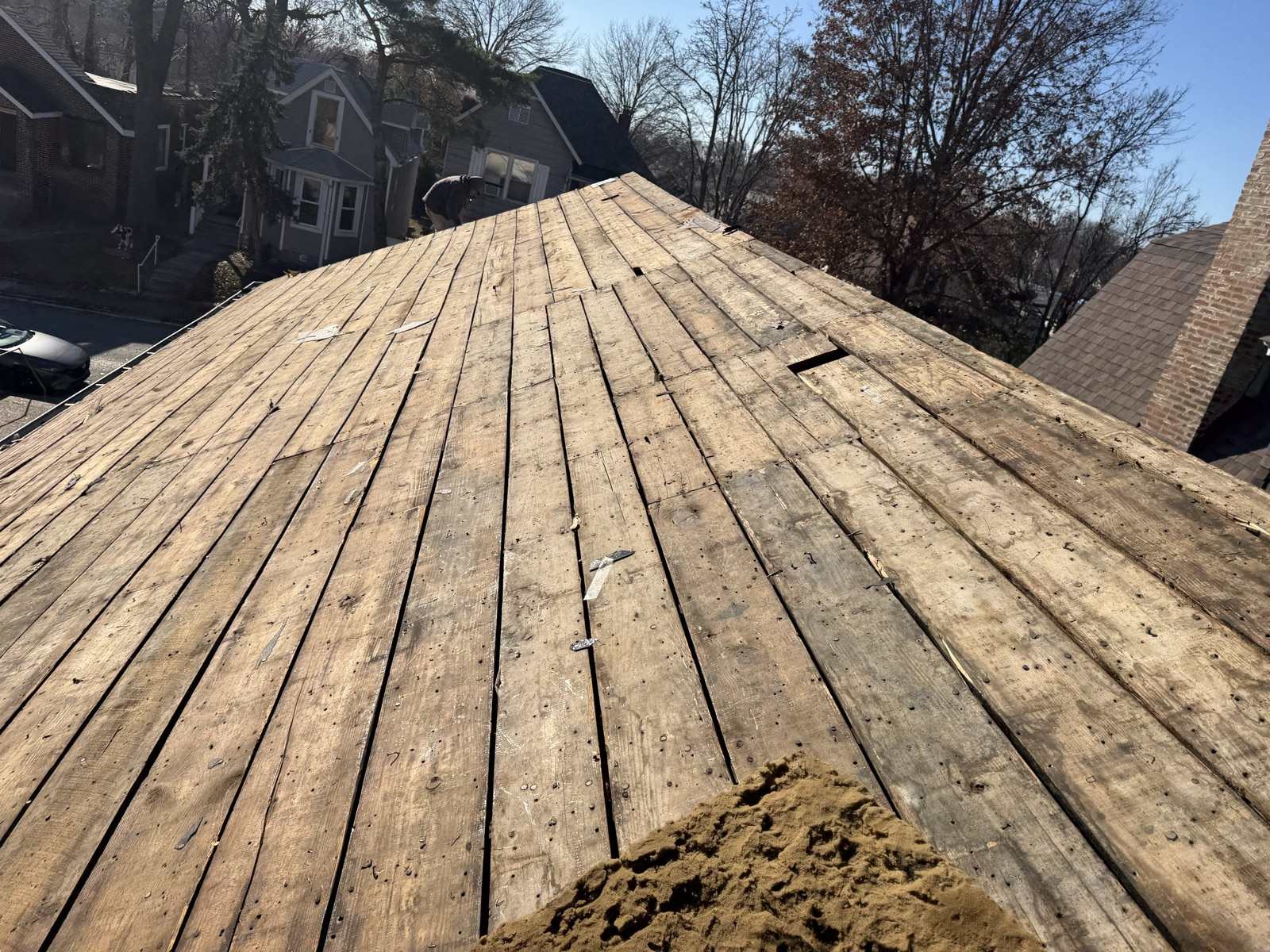
Laying a new roof over an existing one saves the tear off, the disposal and a day of labour, and for a long time it was a normal thing to do on a sound single layer. It has real costs that arrive later. The new shingles telegraph the shape of the old ones underneath, so the surface is never flat. The assembly holds more heat, which is not kind to asphalt. Flashings get built up rather than replaced, and a built up flashing is a future leak. And crucially, the decking is never inspected, so a soft board simply stays soft with two roofs on top of it.
The bill arrives at the next replacement, when both layers come off at once and the deck below has had two lifetimes of moisture and no attention.
Knowing the layer count before the tear off
It can usually be established without guessing. At a rake edge or a gable end the layers are visible in section, and a roofer with a ladder can count them in a minute. Lifting a shingle at an eave shows the same thing. Where it cannot be seen, an estimate should say so and price a contingency rather than assume one layer and discover two.
This matters because the layer count is one of the few unknowns that can be resolved in advance for the cost of climbing a ladder. Unlike decking condition, which genuinely cannot be seen until the surface is off, layers are usually knowable. A quote that guessed the layer count has skipped a step it did not need to skip.
What happens to the debris
Ask three specific questions and you will learn a great deal about how a company works. Where does the dumpster sit, and what protects the driveway underneath it. How is the debris moved from roof to container, because a chute and a tarp system leaves a very different garden behind than a crew throwing bundles. And what magnetic sweep happens at the end, because a roof that came off dropped several thousand nails and most of them are now in your lawn.
- Dumpster placement, and what goes under it to protect the surface
- Tarping over shrubs, air conditioning units, decks and windows
- How the debris travels: chute, barrow, or over the edge onto a tarp
- Magnetic sweep of lawn, drive and street, at least twice
- Whether the tip receipt is available if you want to see the tonnage
Where the layer count meets the permit rule
In St. Louis County a like for like asphalt replacement at 4:12 or steeper generally does not need a permit, but the picture changes if more than a quarter of the decking is replaced or if the material changes. Layers matter here indirectly: a two layer tear off is far more likely to reveal decking that has to come out, which can push the job over that threshold. Your own municipality may be stricter than the county. Ring the building division for your address and ask before the work starts.
Five minutes at the rake edge
Find out today how many layers are up there
Layer count roughly doubles the tear off labour and roughly doubles the tonnage going to the transfer station, and it can usually be read at the rake edge in five minutes. Keys counts it, writes the number down and prices against the count rather than an assumption. An estimate built on a guess here is an estimate that grows on the first morning.
If you would rather talk it through, this is the office line and not a call centre.
(314) 220-2333Keys Roofing, greater St. Louis