The Takeoff Detail
Count the chimneys, valleys and vents before you compare prices
The open field of a roof is the cheap part. Everything that costs real time, and almost everything that eventually leaks, happens where the plane is interrupted: a chimney, a skylight, a dormer wall, a valley, a vent, a pipe. A quote that says all necessary flashing has counted none of them.
The thing to look for on your estimate is a number, and the thing to worry about is a phrase. A crew laying open field on a simple plane covers ground quickly. The same crew at a chimney is doing something else entirely: cutting a reglet or working to existing masonry, setting step flashing course by course up both sides, forming a saddle on the upslope face, and making all of it shed water in the direction water actually travels. That is careful hand work and it takes as long as it takes.
This is why two roofs with identical square counts can carry very different labour. One of them is a long simple gable. The other has two chimneys, three dormers, four valleys, a skylight and a run of sidewall, and every one of those is a place where the roof stops being a surface and starts being a joint.
The count belongs on the estimate as a count
A takeoff should enumerate them. Not "flashing as needed", which means nothing and can be argued about later, but a list: two chimneys, one skylight, four pipe collars, two box vents, ninety linear feet of valley, forty linear feet of sidewall. When the count is written down, two quotes become comparable, and you can see instantly whether one of them plans to reuse something the other plans to replace.
| Detail | The work | Where it fails |
|---|---|---|
| Chimney | Step flashing up both sides, apron at the base, saddle or cricket above | Reused old flashing, no cricket on a wide chimney |
| Skylight | Head, sill and step flashing, sometimes a new flashing kit | Flashed over rather than reflashed |
| Dormer | Sidewall step flashing, short runs, extra starter, two valleys | Siding not lifted, flashing surface caulked instead |
| Valley | Ice barrier, then woven, closed cut or open metal | Nails placed in the water path |
| Pipe collar | New boot slid under the upslope courses | Old cracked rubber left in place |
| Sidewall | Step flashing behind the wall covering, kick out at the bottom | Missing kick out, water into the wall |
The word to listen for is reuse
Flashing is the metal that makes a joint watertight, and it has a life. Old step flashing that has been on a chimney for decades is thin, often corroded at the fold, and frequently bedded into mortar that is itself failing. Reusing it under a new roof saves an hour and a small amount of material, and it puts the oldest component in the assembly under the newest one.
So the question on any estimate that mentions a chimney is simple: is the flashing new. Not "checked". Not "sealed". New. If the answer is that the existing flashing will be reused because it is in good condition, that may well be true, and it should be written down as a decision rather than discovered later as a default.
Ventilation is a detail line, not an extra
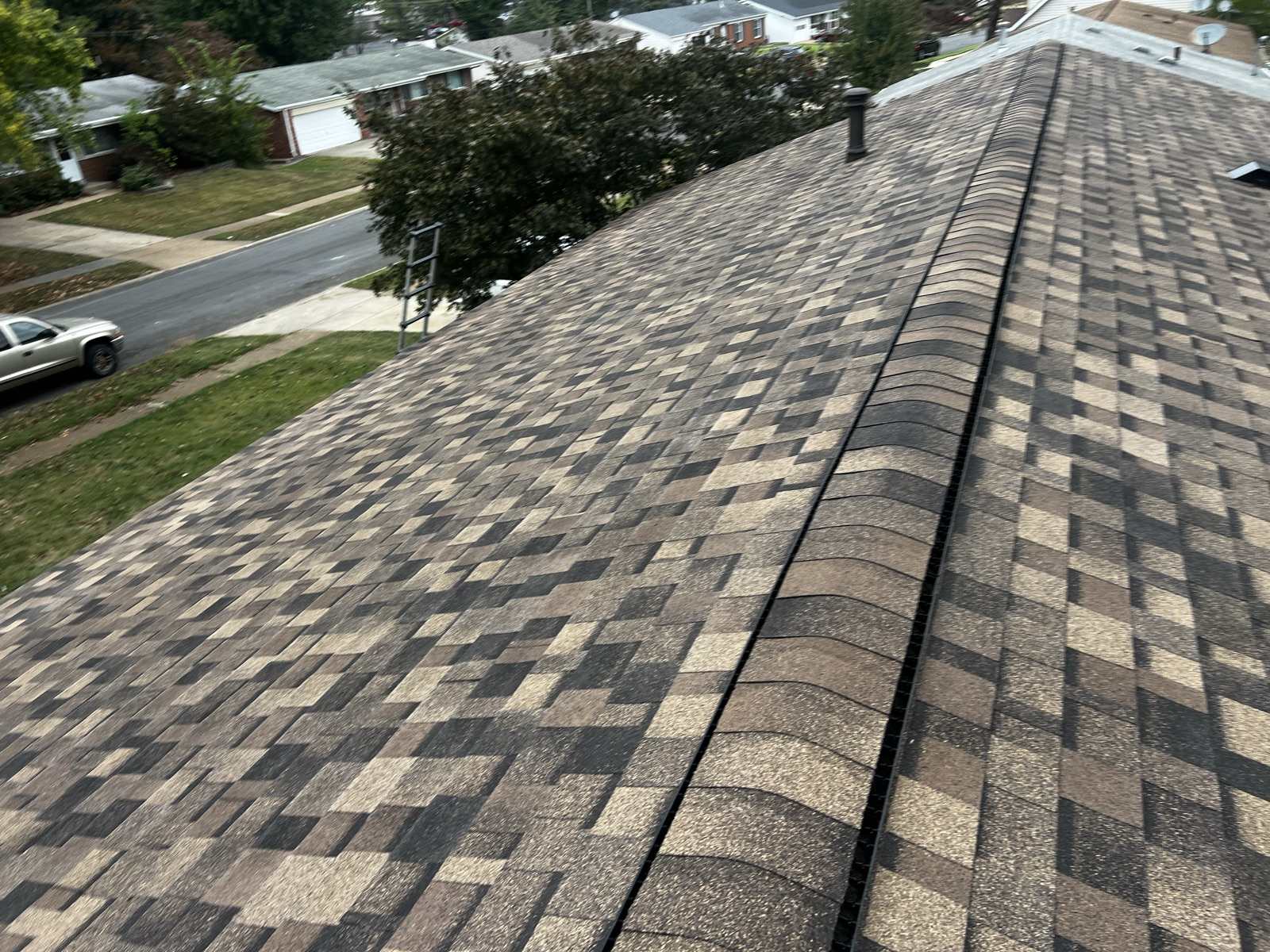
Intake at the eave and exhaust at the ridge is what keeps an attic from cooking the underside of the shingles in July and condensing moisture onto the decking in January. It is priced as part of the job because it is part of the job. What varies is whether an estimate says what is being installed and how much of it: linear feet of ridge vent, a count of box vents, whether the soffit intake is actually open or has been painted shut at some point in the house's life.
A roof with plenty of exhaust and no intake does not ventilate. It just has holes in the top. That is a common finding on older houses where soffits were covered over during a siding job, and it is worth asking about specifically, because it is invisible from the ground and cheap to correct while there is already a crew on site.
Two chimneys is not twice one chimney
It is more than twice, in practice, because each one needs its own setup, its own material and its own sequence, and neither can be done quickly. Masonry condition compounds it. A chimney with spalling brick or failed mortar cannot take flashing properly until the masonry is sound, and that is a mason's job rather than a roofer's. An honest estimate flags it and stays out of it, rather than quietly flashing to a surface that will not hold.
Why this page matters for cost
Because detail work is where two quotes on the same house separate most and explain themselves least. Field shingle is a commodity: everyone is buying similar material and laying it at a similar pace. Detail is craft, and craft is time, and time is the largest single variable a roofing company controls. When a quote is unusually low, this is usually where the difference went, and you will not see it for four or five years.
Counted, not described
Have every chimney, valley and vent counted on your scope
Keys lists the chimneys, skylights, dormers, vents and pipe collars as numbers, the valleys and sidewalls in linear feet, and says at each one whether the flashing is new or reused. A count can be compared against another company's count. A phrase like all necessary flashing cannot be compared against anything.
If you would rather talk it through, this is the office line and not a call centre.
(314) 220-2333Keys Roofing, greater St. Louis