The Takeoff Class 4
Class 4 costs more. Get it named in writing before you decide.
Impact resistant shingles are tested against UL 2218 and cost more to buy. Some carriers give a premium credit for one, and whether yours does, how large it is and what it wants to see are questions only your own insurance company can answer. What a roofer can do is name the exact product and its classification on the scope and the invoice, so you can go and ask properly.
Before anyone talks you into or out of impact resistant material, get the standard straight and get the product named. Impact resistance in asphalt shingles is measured against UL 2218, a standard in which steel balls of specified diameters are dropped from specified heights onto the same spot twice, and the sample is then examined for cracking in the mat. There are four classes. Class 4 is the highest and uses a two inch ball.
It is a laboratory test, not a warranty against hail, and it is worth being precise about that. A Class 4 shingle is more resistant to impact than a standard one. It is not hail proof, nothing is, and a large enough stone at a bad enough angle will still cause damage.
Why the subject comes up in St. Louis specifically
Because this metro takes a lot of hail. The NOAA storm events record logs one hundred and twenty five hail reports in St. Louis County alone between 2020 and 2025, with a maximum recorded stone of two and a half inches and an average of one and a third inches. St. Charles County logged fifty four in the same window, Jefferson County forty four and Franklin County thirty.
Those are counts of reported events rather than of insured losses, and reporting density tracks population, so a densely populated county will always log more reports than a rural one experiencing the same weather. They still describe a real pattern. Missouri ranked fifth nationally for major hail events in 2025, at two hundred and fifty three, according to the Insurance Information Institute citing the NOAA Storm Prediction Center. April and May alone carry roughly fifty six percent of this metro's annual hail reports in the NOAA climatology for the local forecast office.
Two rankings, not one
The fifth place ranking above is for the count of major hail events in 2025. State Farm separately ranked Missouri second in hail claim dollars paid. Those are different measures from different organisations and they should never be merged into a single claim.
The premium credit, and who owns the question
Many carriers writing homeowners policies in hail exposed states offer a discount on the wind and hail portion of a premium for a roof built with impact resistant material. The size of it varies by carrier, by state filing and by policy form. Some require the product to be Class 4 under UL 2218 specifically. Some ask for a certificate of installation, a photograph of the wrapper, or an invoice naming the exact product.
None of that can be answered by a roofing company, and here is the important part: you should be suspicious of one that tries. A roofer does not know your policy form, your carrier's filings in Missouri, your prior claim history or your underwriting position. The person who does is the agent or the company whose name is on your declarations page.
- Ring your carrier or agent before you choose the material, not after.
- Ask specifically whether a credit exists on your policy form in Missouri, and how much.
- Ask exactly what documentation they want, and in what form.
- Ask whether the credit applies to the whole premium or only the wind and hail portion.
- Then decide whether the extra material cost is worth it to you on those numbers.
What a roofing company can properly do in that process is supply the facts about the product: the exact shingle, its UL 2218 classification, and an invoice or certificate naming it. That is documentation, and providing documentation is squarely a contractor's job.
The line a Missouri roofer may not cross
This matters on any page that touches insurance, so it is stated plainly. A roofing contractor in Missouri may not represent or negotiate on a homeowner's insurance claim, because RSMo 407.725 expressly prohibits it, and the same statute bars a contractor from advertising to absorb, rebate or waive any part of a deductible. A violation is an unfair practice under the Missouri Merchandising Practices Act.
What a contractor may properly do is measure and photograph the roof, produce a written scope of the damage and the repair, and attend on site as the contractor when the adjuster inspects. The claim, the correspondence and every decision in it remain the homeowner's. If you want professional help with a claim itself, that is a public adjuster: a separate licensed profession under chapter 325 of the Missouri Revised Statutes, and RSMo 325.055 bars a public adjuster from also doing the repair work.
Is it worth it, then
That is a decision this page deliberately declines to make for you, because it depends on three numbers only you can gather: what the material actually adds to your quote, what your carrier's credit actually is, and how long you expect to own the house. The first comes from a measured estimate. The second comes from your carrier. The third is yours. Multiply the credit by the years, set it against the extra cost, and the answer stops being a matter of opinion.
Named on the scope, named on the invoice
Get the exact product and its class in writing, then take it to your carrier
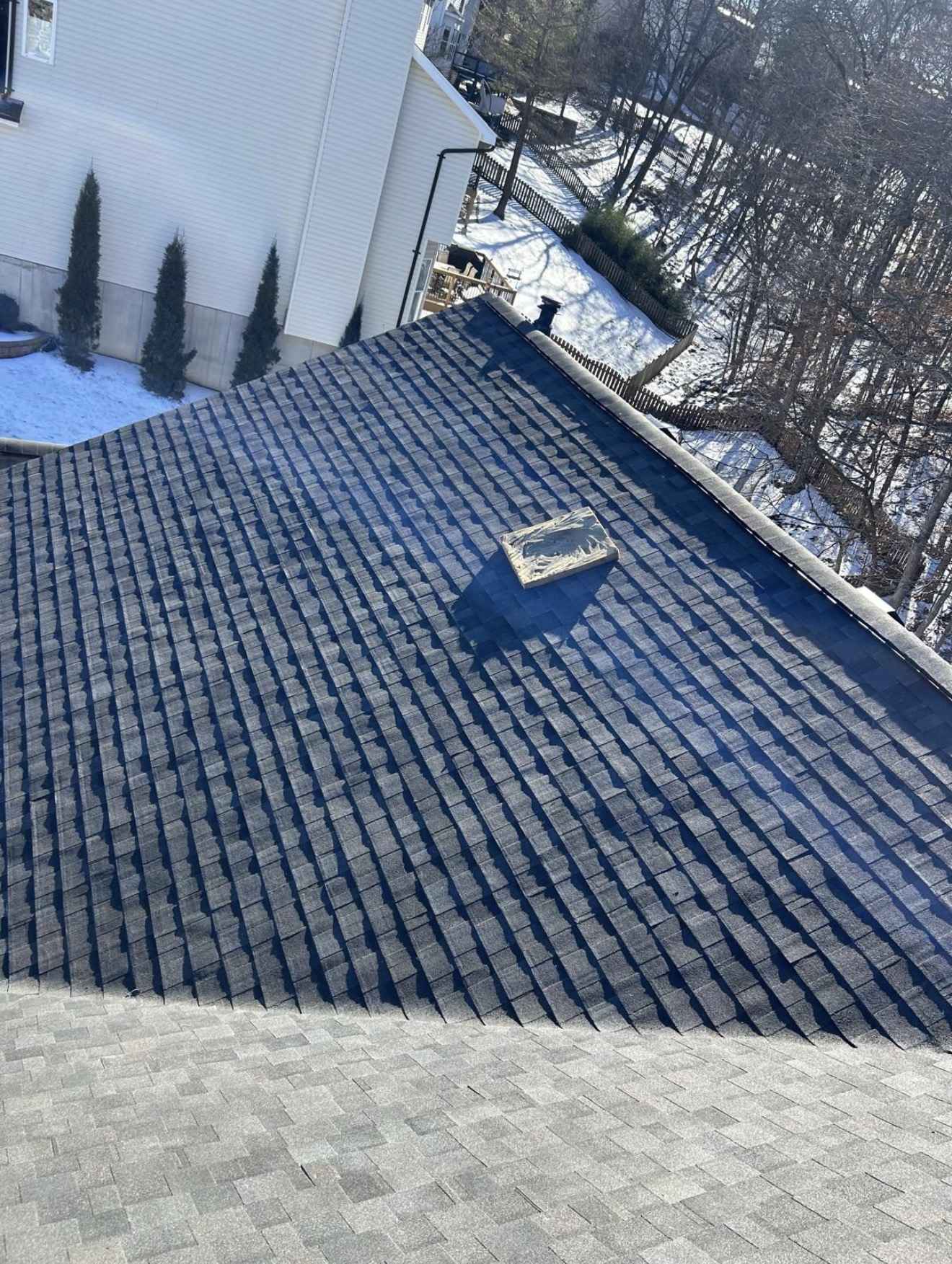
Keys names the specific shingle and its UL 2218 classification on the scope and on the invoice, and photographs the bundle wrappers on the slope during the installation. That is the evidence a carrier asks for. Whether your policy gives a premium credit is a question only your own insurer can answer, and having the product named in writing is what lets you ask it properly.
If you would rather talk it through, this is the office line and not a call centre.
(314) 220-2333Keys Roofing, greater St. Louis